Order Automatica enemy tier list
You do not draft the 17 enemy units. You draft the answer.
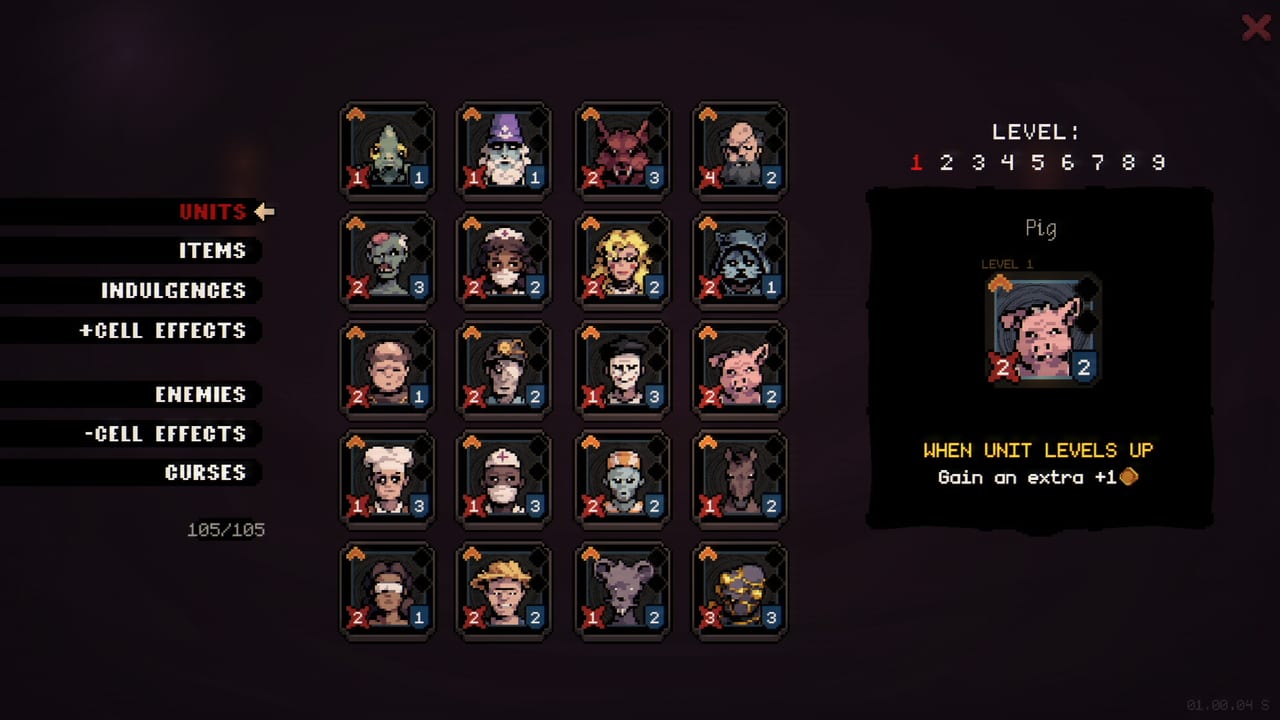
Launch Order Automatica includes 17 enemy units. They are not a second player. They are the other ritual: same rules, same items, same cell numbers, hostile candles. You never buy them. You still have to place against them. This list is a threat ranking for 1.00, not a collection checklist. The Codex Enemies tab is the complete unlock grid.
S means “if this portrait is on their cell 1 or in a summoner row, change your shop.” A means “respect the text.” B means “honest stats, answer with a tank.” C means “ignore unless it is sitting on a glowing tile.”
We do not invent names the Codex has not shown in public footage. Where a portrait is still a silhouette in your copy, rank the job (summoner, adjacent chip, wall) and fill the title when you unlock it.
S-tier threats
Enemy summoners (Hermit-shaped jobs). On death they fill empty spots in a row with small bodies. If their row is empty, they will spawn into it the way your Hermit does. Your answer is not more chip. Your answer is to win the fight before they die, or to present a wall that the summons cannot chew. See grid and positioning — empty tiles are a resource for them too.
Adjacent-damage portraits (Imp-shaped jobs). When battle begins they slap every neighbor. Clustered tanks on their side become a feature. Clustered tanks on your side become friendly fire if you copied the shape. Spread your plus-shape only when Madame is yours, not when theirs is about to clap.
Giant cell-1 walls. High defense, no poetry. If their cell 1 is a huge number, stop poking the backline. The attack order still walks 1 then 2 then 3. A backline Mage that never sees cell 1 is a shop mistake, not an unlucky roll. Put a real body in your own cell 1 and give it Taunt if you have it (item tier list).
A-tier threats
On-kill scalers (Blood Keeper jobs). They get paid for finishing a unit this turn. Chip first from a low cell number or they snowball. Poison-death engines on your side can deny them the last hit by killing the target in the shop — that is a Distill play, not a combat play.
Upon Death support (Life Holder / Madame jobs). If they die, neighbors get stats or extra triggers. Killing their support first is correct only if you can actually reach it. Often you cannot. Kill the body that is about to eat your cell 1 instead.
Hold / item-printer enemies. Rare on the opposing board, but when an enemy unit is clearly parked as a Hold analogue, they are generating relics between fights the same way yours does. You cannot steal the Hold slot. You can end the rank faster so they print fewer gifts.
B-tier threats
Honest soldiers. Caps, construction hats, 3-defense portraits with modest triggers. Merge your own copies rather than pivoting to “counter” a B-tier enemy. Initiate is full of these. Adept replaces them with the S-tier jobs above.
Row-chip mages. They want a matching occupied row. If their mage faces empty cells, they wasted a shop. You can sometimes bait this by leaving a row hollow on purpose — only if your own summoner is not using that row.
C-tier until the tile says otherwise
Leftover 1/1s. They exist to fill a Codex page and to die into someone’s On-kill text. Do not rebuild your board around them.
A glowing C-tier on a stacked cell effect is not C-tier. A nothing portrait on a plus-six defense tile or an early-ability tile is a wall. Read cell effects before you call the portrait weak.
How enemies use your systems against you
They have Indulgences. They have Curses — except the Curse you pick is an upgrade for them. Steam’s Indulgences & Curses news post is explicit: Curses are blessings for the enemy. If you greed a shop and then pick a Curse that summons a stone onto your empty cell, you just built their win condition. Candles and Curses is the discipline page.
They also receive cell effects. A negative stamp on their board is a gift. A positive stamp on their cell 1 is why your chip plan died. The floor is in the cell-effects guide; the portrait is here.
Drafting against a visible board
You can see their grid during preparation. Use it.
- Identify the job on their cell 1 (wall, scaler, empty).
- Identify empty rows (summoner bait).
- Identify adjacent clusters (Imp-shaped clap).
- Buy the unit that answers that sentence, not the S-tier portrait you wanted in the abstract.
The unit tier list is for your shop. This page is for their board. If the two disagree, their board wins. A Madame in your pocket does nothing if their cell 1 is a 10-defense wall and you sat Madame in cell 7.
Ranks where the jobs show up
Initiate 1–2: B-tier soldiers, teaching shops. Initiate 3: the cliff. Penitent: summoners and Curses. Adept: mixed jobs plus less forgiveness for leftover Essence. Serpent’s Arena: named bosses such as the Golden One (the achievements page lists Serpent’s Lesson). Walk the ladder in the ranks walkthrough.
Related pages
- Your portraits: unit tier list
- Floor stamps: cell effects
- Persistent taxes: Indulgences
- Placement: grid and positioning
Unlock the Enemies tab. Then stop drafting in a vacuum.
Frequently Asked Questions
Quick answers for the current ritual.
How many enemy units does Order Automatica have?
17 at launch. They are a separate Codex tab from the 20 player units.
Can I recruit enemy units?
No. You draft against them. Same rules, opposite candles.
Why did a weak-looking enemy win?
Check the tile under them and their Indulgence. A C-tier portrait on a defense stamp is a wall. See cell effects.
Is this list official?
No. It is a fan threat ranking. Hover the Codex for printed text.